University of Minnesota Twin Cities

Minneapolis, Minnesota

Biology student & undergraduate researcher

Miller Pan.

Biology / Computer Science / Pharmacology

Understanding living systems.
Connecting ways of thinking.

My work spans cancer metabolism, mRNA delivery, computational screening, open-source software, and patient support. I’m interested in how experimental and computational approaches can inform one another.

CurrentlyJoining the Gardner lab
Fungal cell biology · project taking shape

01 / Research

Questions at the bench.
Connections beyond it.

Cancer biology, delivery systems, and a new direction in fungal cell biology.

The Hormel Institute

SURE Research Intern · Robert Clarke’s lab

Question
How does endocrine resistance reshape breast cancer metabolism, and what role might oxygen availability play?
My contribution
I performed cell-culture and protein-based experiments, interpreted complementary metabolic evidence, and developed an oxygen-availability protocol with mentor feedback.
Status
Summer internship completed; manuscript collaboration ongoing.
Breast cancer & hormone receptorsEndocrine resistanceMetabolic reprogramming
Methods & project details

Research context & the oxygen question

In Robert Clarke’s lab at the Hormel Institute, I investigated metabolic changes and possible therapeutic vulnerabilities associated with endocrine resistance in breast cancer. The project focused on mitochondrial metabolism, the succinate–fumarate pathway, and how cells respond to changes in oxygen availability.

One question was whether oxygen availability contributes to the hypoxic-like metabolic behavior of resistant breast cancer cells. With feedback from my mentor, I developed a protocol to investigate that question and worked with experimental evidence from several complementary approaches.

Experimental work & evidence

I independently maintained breast cancer cell cultures and performed protein preparation, Western blotting, and cell-growth and migration assays. These experiments helped characterize the features associated with endocrine resistance.

The analysis brought together results from metabolic assays, imaging, flow cytometry, Seahorse analysis, and isotope-tracing studies. My work included interpreting those results alongside one another and developing the oxygen-availability protocol with mentor feedback. The project combined the practical work of maintaining experimental systems with the task of interpreting different kinds of evidence about cellular metabolism.
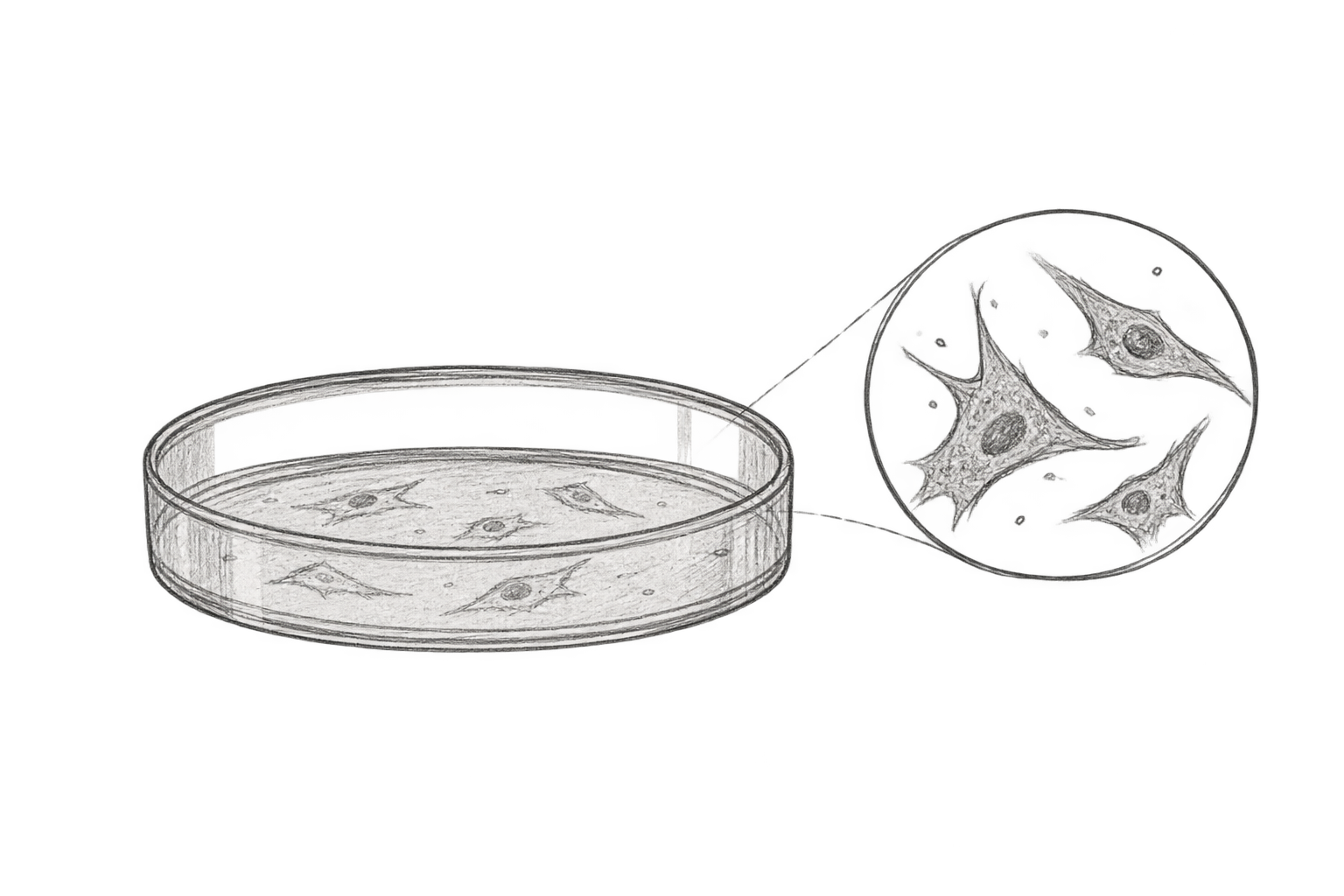
Conceptual pencil sketch of a culture dish and adherent cells.
Cell culture · conceptual illustration, not microscopy data.

Symposium & ongoing manuscript

I presented a poster and flash talk at the Hormel Institute’s 2026 Summer Research Symposium. The presentation, with A. K. Yadav and Robert Clarke, was titled Mapping Endocrine Resistance–Associated Phenotypes and SDH-Linked Metabolic Vulnerability in Breast Cancer Cells.

The full-time summer internship has finished, and the manuscript collaboration continues. My contribution includes drafting and revising assigned sections, bringing together relevant literature and experimental evidence. That writing extends the project beyond the summer placement while the manuscript remains in progress.
Kirtane Laboratory

Pharmaceutics Laboratory Volunteer · Part-time

Question
Which lipid-nanoparticle formulations are promising candidates for mRNA delivery?
My contribution
I used an existing Uni-Mol pipeline to help prioritize formulations, alongside mRNA preparation, purification, and biomaterial modification.
Status
Part-time volunteer appointment completed in April 2026.
mRNA therapeuticsLipid nanoparticlesUni-Mol screening
Methods & project details

Delivery research & computational screening

In Ameya Kirtane’s lab, I supported research on mRNA-based cancer therapeutics and lipid-nanoparticle delivery systems. The work combined experimental formulation development with computational screening of candidate compositions.

I used an existing Uni-Mol modeling pipeline to generate predictions for lipid-nanoparticle formulations and help prioritize candidates for experimental testing. The predictions helped guide which formulations to investigate at the bench.

Molecular biology & material preparation

Alongside computational screening, I performed molecular biology workflows that included in vitro transcription, mRNA purification with spin-column methods, and nucleic-acid quantification using NanoDrop. These were part of my support for the lab’s formulation and delivery research.

I also worked on biomaterial preparation and modification, including acrylate conjugation to chitosan for downstream formulation and experimental applications. The role brought together mRNA preparation, measurement, material modification, and computational screening during a part-time volunteer appointment from February 2025 through April 2026.

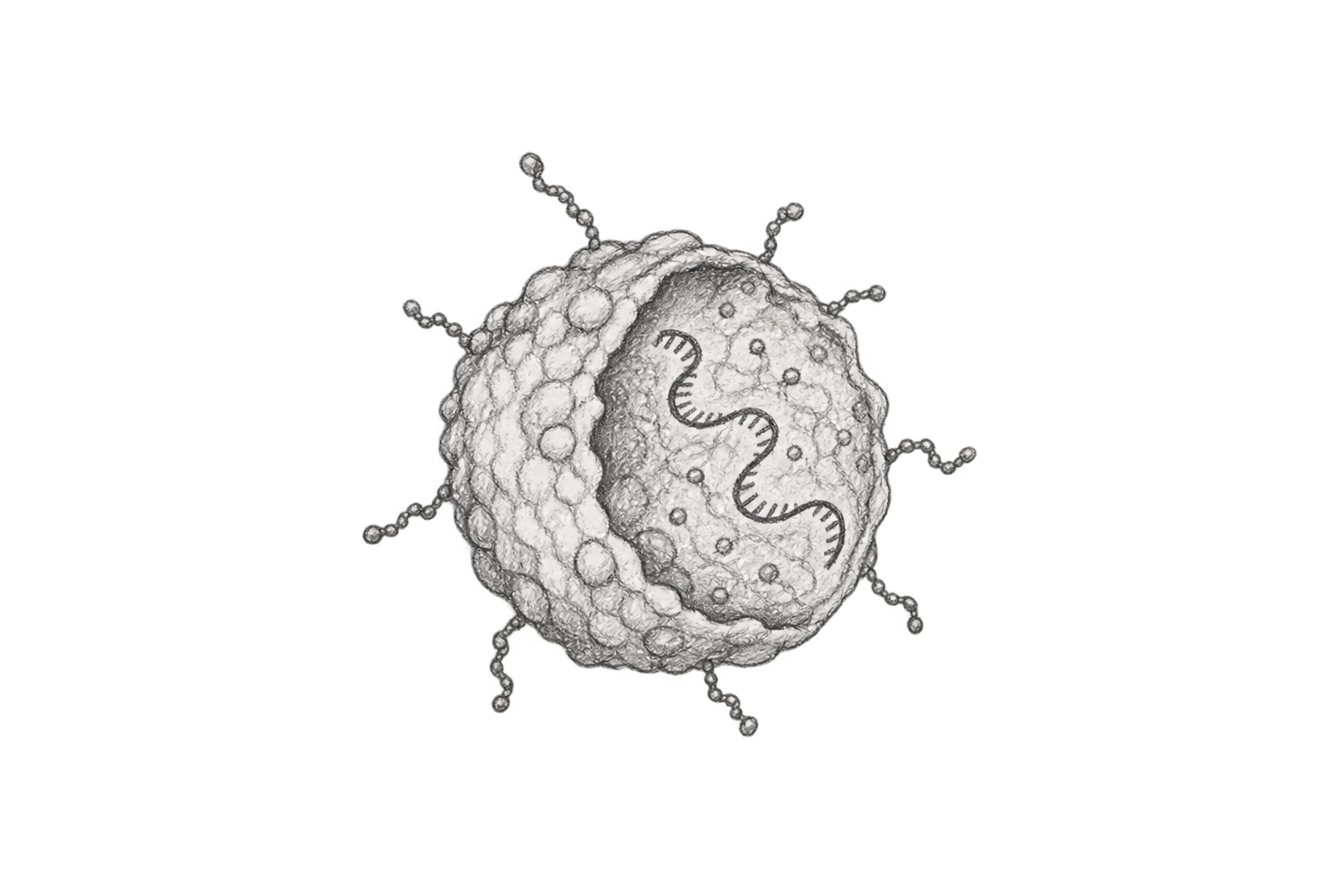
Conceptual pencil cutaway of a lipid nanoparticle carrying RNA.
Lipid nanoparticle & RNA · simplified illustration, not to scale.

Gardner Laboratory

Joining Melissa Gardner’s lab

Research direction
Fungal cell biology, within a lab studying microtubules, chromosome segregation, and accurate cell division.
Next step
I’m joining Melissa Gardner’s lab at the University of Minnesota.
Status
My specific project and research question are still being defined.
Cell divisionMicrotubulesChromosome segregation
The lab’s research & related papers

Lab research context

The group studies the physical mechanisms of cell division: how microtubules move and attach to chromosomes, and how cells distribute their genetic material accurately. Its broader research includes questions relevant to genome stability and antifungal drug resistance. This is the broader research setting as my project takes shape.

Read about the Gardner lab’s research ↗

Published work from the lab

In a 2023 study, Gardner and colleagues used budding yeast to examine how cells detach chromosome connections under low tension. They found that the forces generated as microtubules grow and shorten help separate weakened attachments.

Another 2023 study examined how low tension recruits the yeast protein Ipl1 to centromeres for error correction. Together, these studies show how the group connects molecular regulation with physical forces during cell division. They provide context for the lab’s work while my own project takes shape.

Microtubule dynamics and detachment · 2023 ↗
Low tension and Ipl1 recruitment · 2023 ↗

Caffeine exposure & antibiotic response

Foundations of Biology 2 Lab · University of Minnesota

Question
How does caffeine exposure affect the response of Escherichia coli to antibiotic treatment?
My contribution
I conceived and led a three-student project, designed the treatment conditions, and took primary responsibility for culture, plating, microscopy, and comparing responses.
Status
Course project completed in December 2024; findings presented with the team.
Bacterial cultureAntibiotic responseExperimental design
Project responsibilities

Experimental design & team coordination

In Foundations of Biology 2 Lab at the University of Minnesota, I conceived and led a three-student project asking how caffeine exposure influenced the response of Escherichia coli to antibiotic treatment. I developed the research question, treatment conditions, culture and plating strategy, and division of experimental tasks.

I took primary responsibility for bacterial culture, plating, antibiotic-treatment experiments, microscopy, and assessment of growth and other observable responses. I also led the comparison of results across conditions and coordinated the preparation and presentation of our findings.

02 / Computation & reasoning

From an observation
to a testable next step.

Three decisions behind the work: what to ask, what to test, and how to handle failure.

Hormel Institute

Questioning the conditions

  1. The observation

    Resistant cells showed hypoxic-like metabolic behavior.

  2. The distinction

    That pattern raised a question about oxygen availability; it did not establish oxygen as the cause.

  3. The next step

    I developed a protocol with mentor feedback to investigate oxygen’s possible contribution.

Research context

Kirtane Laboratory

Choosing what to test

  1. The decision

    Which candidate lipid-nanoparticle formulations should move to experimental testing?

  2. The approach

    I used predictions from an existing Uni-Mol pipeline to help prioritize candidates.

  3. The boundary

    The predictions guided which formulations to investigate at the bench; they were a starting point for experimental work.

Delivery research

Cadence Go Client

Keeping recovery controlled

  1. The failure

    A non-retryable polling error could stop a worker.

  2. The tradeoff

    Continuing keeps the worker running, but repeated attempts still need backoff to avoid a tight loop.

  3. The change

    I preserved backoff while removing the termination path, and added a targeted unit test.

Implementation & review

Open-source contribution

Cadence Go Client

Contributor · PR #1484
Merged January 9, 2026

View merged contribution

A reviewed change, with a targeted test.

The public pull request documents the change to baseWorker.pollTask(), its unit test, and the review. I reported a successful run of the project’s unit-test command on macOS.

Implementation, testing & review

Worker behavior

A non-retryable polling error in Cadence’s Go client could cause a worker to terminate itself. My open-source contribution changed that behavior so the worker logs the error and continues polling.

The change preserves backoff between attempts. That matters when an error persists: the worker continues running without turning repeated attempts into a tight loop. The contribution addressed a specific error-handling path in baseWorker.pollTask(), in response to a request to remove the unretryable-error termination logic.

Test & review record

I added a targeted unit test for the non-retryable polling-error path and reported a successful run of the project’s unit-test command on macOS. The pull request contains the worker change and its test.

The change was reviewed and merged into the Cadence Go client on January 9, 2026. The discussion, implementation, and test are available in the public pull request.

Read the merged contribution ↗

03 / Experience

Research, service
& professional practice.

Supporting people, communicating research, and turning information into useful work.

Digital healthcare

M Health Fairview

Volunteer Digital Navigator
October 2024–present

As a volunteer Digital Navigator at M Health Fairview Clinics and Surgery Center, I provide one-on-one technical assistance to patients and community members using MyChart and other digital healthcare tools.

Role details

The work includes support for people with limited digital experience, troubleshooting access and usability problems, and helping people navigate unfamiliar interfaces. I also contribute user feedback toward improving the accessibility of digital services. The role connects individual assistance with attention to the barriers people encounter while trying to use healthcare technology.

Patient guidance

Shanghai Changhai Hospital

Volunteer Patient Coordinator / Medical Receptionist
May 2021–February 2022

At Shanghai Changhai Hospital, I volunteered as a Patient Coordinator and Medical Receptionist during the COVID-19 pandemic, providing guidance and support to patients.

Role details

I also helped improve hospital signage and labels to better serve elderly patients. This work concerned the physical setting of patient care: helping people find their way through a hospital and contributing to clearer directions within it.

Disability & arts education

Toedt / Upstream Arts

Literature Review and Research Assistant · Part-time
September 2023–November 2024

Working with Professor Elise Toedt, I contributed to a collaborative project with Minnesota nonprofit Upstream Arts. The research examined multidimensional education and arts-based approaches for disabled communities.

Role details

Literature & evidence synthesis

I conducted literature searches and reviewed, organized, and synthesized academic sources. I maintained relevant publications and citations in a shared Zotero library and identified themes and connections across interdisciplinary literature. My contribution supported the project’s research foundation: bringing sources together so their ideas could be compared, connected, and used in the developing work.

Research communication & CCCC

I helped translate the research into materials for academic and community audiences and contributed to the development and presentation of the project’s findings. The work extended from gathering literature to helping communicate what that literature could offer the project.

It contributed to the 2025 Conference on College Composition and Communication presentation Remixing First Year Writing with a Critical Disability and Arts-Based Focus, with L. Isaac, S. Ibrahim, and E. Toedt. My part-time research assistant appointment ran from September 2023 through November 2024.

Training analysis & administration

Haleon

Training Specialist Intern
May–October 2024

As a Training Specialist Intern at Haleon, I analyzed training activity data for retail personnel, including monthly activity and trends in participation and performance.

Role details

Analysis & reporting

I prepared reports on seasonal training progress, retail activity, and market growth trends to support internal evaluation and planning. The work brought those observations together in reports for the organization during my May–October 2024 internship.

Retail-pharmacy program administration

Alongside analysis and reporting, I administered reimbursement invoices connected with retail-pharmacy training programs. This was the administrative part of my Training Specialist internship at Haleon.

The appointment brought together training reports and the supporting paperwork around those programs. It ran from May through October 2024.

Livestream sales & communication

Shanghai Huangdou Network

Internet Sales Department Intern
June–September 2022

I interned in the Internet Sales Department at Shanghai Huangdou Network Technology Co., Ltd., an online audiobook platform, from June through September 2022.

Role details

Sales-event analysis

My work included daily monitoring and statistical analysis of livestream sales events. It was a role with an audiobook platform, behind the scenes of its live sales broadcasts.

Streamer collaboration

I also worked with streamers, building connections and offering suggestions intended to improve sales. That work accompanied the daily monitoring and statistical analysis of livestream events.

The internship had a numerical side and a conversational one: following sales activity, then communicating with the people presenting the broadcasts.

Research communication

Selected presentations.

  1. 2026

    Mapping Endocrine Resistance–Associated Phenotypes and SDH-Linked Metabolic Vulnerability in Breast Cancer Cells

    Pan, M., Yadav, A. K., & Clarke, R.

    The Hormel Institute Summer Research Symposium · Poster & flash presentation
  2. 2025

    Remixing First Year Writing with a Critical Disability and Arts-Based Focus

    Pan, M., Isaac, L., Ibrahim, S., & Toedt, E.

    Conference on College Composition and Communication · Oral presentation

04 / Education

A foundation
across disciplines.

In progress · Expected summer 2027

University of Minnesota Twin Cities

Bachelor of Science · College of Biological Sciences

Major
Biology
Minor
Computer Science
Minor
Pharmacology

Dean’s List · Spring 2026

Completed · Summer 2023

Shanghai Qibao Dwight High School

International Baccalaureate Diploma

Focus: Biology, Literature, and Economics.

05 / Skills

Methods & tools.

Programming, laboratory methods, and the work of interpreting and communicating research.

Computation & data

Programming

  • Java
  • Python
  • C

Data & databases

  • SQL — relational database queries.
  • R — data analysis and visualization.

Bioinformatics & modeling

  • Using Uni-Mol modeling pipelines to screen lipid-nanoparticle formulations.
  • NCBI, UCSC, and ExPASy for gene and protein characterization and sequence searches.
  • DNA and protein sequence analysis and alignment; molecular evolution, expression, and promoter analysis.
  • Basic protein structure prediction and structural analysis.

Experimental work & communication

Cell & molecular biology

  • Mammalian and bacterial cell culture.
  • Western blotting and protein preparation.
  • In vitro transcription, mRNA purification, and spin-column purification.

Cellular & metabolic assays

  • Incucyte live-cell imaging, scratch-wound assays, and microscopy.
  • Flow cytometry, Seahorse metabolic analysis, and SDH activity assays.
  • NanoDrop spectrophotometry.

Research & communication

  • Experimental design, protocol development and troubleshooting, and data interpretation.
  • Literature searching, evidence synthesis, and Zotero reference management.
  • Manuscript drafting and revision, scientific poster preparation, and oral presentation.

06 / Contact

Let’s compare notes.

For research opportunities, collaborations,
or a conversation about the work.

[email protected] GitHub profile